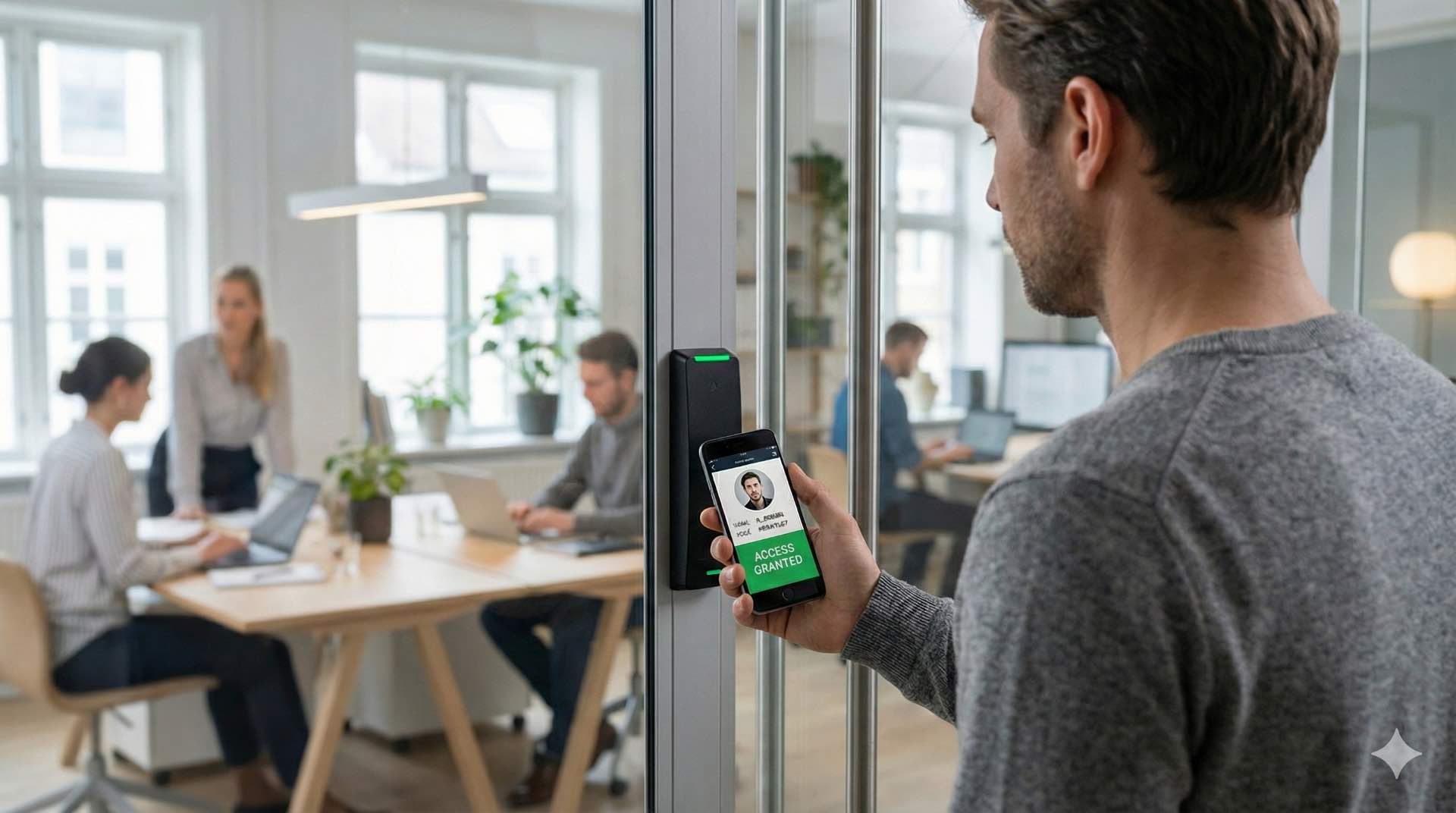
Access control planning often begins with a straightforward question: who should be allowed to enter a building or restricted area? While controlling entry is essential, it represents only one part of how people move through a secure property. Exit routes can influence emergency safety, unauthorized movement, operational efficiency, and the overall effectiveness of a security strategy.
A well-planned system therefore considers the complete journey through a facility. Security professionals need to understand not only how individuals enter controlled spaces but also where they can go afterwards and how they eventually leave.
Exit Doors Can Create Unexpected Security Gaps
An entrance may have carefully managed credentials, monitoring, and authorization rules, yet another door elsewhere in the building could undermine those protections. Exit doors are particularly important because they may connect restricted interiors directly with parking lots, loading areas, stairwells, alleys, or other less monitored spaces.
This creates a potential security gap if the building is designed almost entirely around preventing unauthorized entry. Security assessments should examine where every exit leads, who normally uses it, when it is used, and whether unusual activity can be identified.
The objective is not to make leaving unnecessarily difficult. Instead, exit planning should balance security requirements with safe and practical movement.
Emergency Egress Must Remain a Priority
Access control should never interfere with the ability of occupants to leave safely during an emergency. Fires, power failures, security incidents, and other unexpected situations can require rapid evacuation.
For this reason, access-controlled doors must be planned alongside applicable fire, life safety, and building requirements. Emergency exit hardware, door behavior during power interruptions, alarm integration, and evacuation procedures can all influence system design.
This is also why simply applying the same security configuration to every door may not be appropriate. A door protecting a sensitive internal room can have very different operational requirements from a designated emergency exit.
Think About Movement Between Security Zones
Modern facilities often contain several levels of authorization. An employee may be permitted to enter the main workplace but not a server room, inventory area, laboratory, records room, or management space.
Security planning should consequently look at movement between these zones rather than treating each entrance as an isolated checkpoint. Technologies such as a CyberLock electronic key can be incorporated into broader electronic access strategies where organizations need greater control over authorized access to particular locks or secured areas.
Mapping employee, contractor, visitor, and delivery routes can reveal places where someone could enter through an authorized point and later move toward an area that was not intended for them.
Exit Activity Can Provide Useful Security Information
Exit events may also provide context during an investigation. Knowing when access occurred at particular controlled locations can help security personnel reconstruct movement when reviewing an incident.
Consider a facility containing expensive equipment or controlled inventory. Entry records may show who accessed an area, but understanding movement around nearby doors can provide additional context when investigating missing property or unusual activity.
This makes access information more useful when it is considered as part of a complete security picture rather than merely a digital replacement for conventional keys.
Loading Areas Require Special Attention
Loading docks and service entrances illustrate why entry and exit planning should be connected. These locations may experience constant movement involving employees, contractors, drivers, deliveries, and equipment.
A person may legitimately enter a loading area but should not automatically have unrestricted access to adjacent storage or operational spaces. Likewise, doors used for moving goods out of the facility may require security consideration without creating unnecessary obstacles for legitimate operations.
Understanding these workflows allows organizations to establish appropriate access boundaries while keeping everyday activities efficient.
Review Routes as Buildings Change
Movement patterns rarely remain identical throughout the life of a building. Departments relocate, walls are added, storage rooms change purpose, new tenants arrive, and employee responsibilities evolve. A previously insignificant exit could eventually become an important security point.
Periodic security reviews should therefore consider actual movement through the property. Looking at both entrances and exits can uncover overlooked routes, outdated permissions, and doors whose security role has changed.
Ultimately, effective access control is about managing movement rather than simply locking entrances. By considering how people enter, travel through, and leave a facility, organizations can create security systems that protect restricted spaces while supporting safe exits and efficient daily operations.